

Quality control (in the wardrobe)
Design, defect and everything in between

It all started when I bought the same sweater twice.
The first was in dark navy: cashmere wool blend, slouchy, perfectly oversized. Brand totally unknown to me. It’d come up on my feed as a cheaper alternative to The Row’s Ophelia sweater. (The Ophelia wasn’t on my radar; I sure wasn’t looking for a dupe). But I do live in knitwear, so maybe the algorithm knows me well after all. The chunky Cos favourite hadn’t worked out. I’d been looking out for a chunky knit for a while. This one ticked some boxes.
And so the trouble began: I got a hefty discount code and ordered it in Sandstone too.
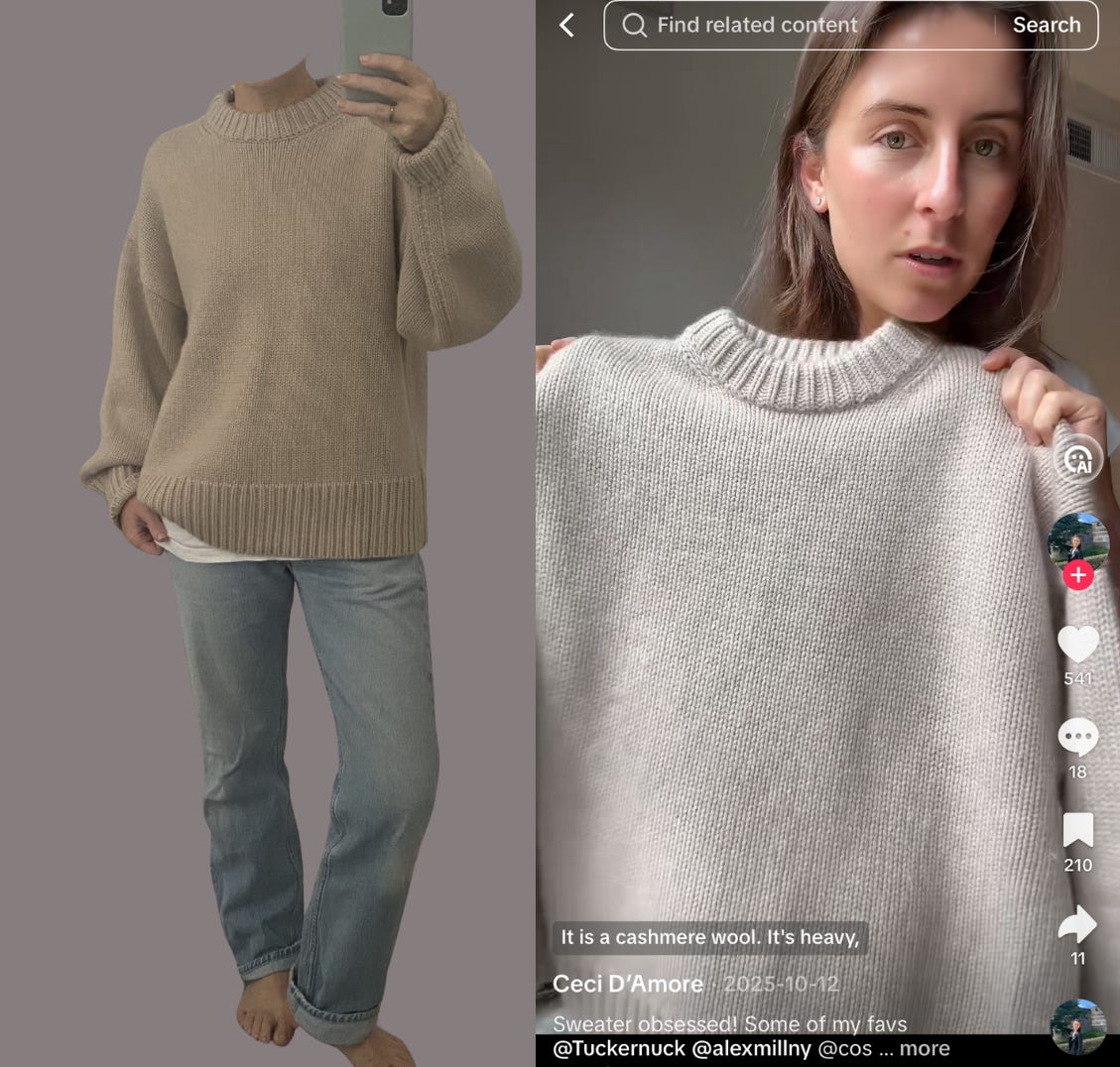
The second sweater arrived and, almost immediately, I noticed an issue. The stitching along the neckline pickup wasn’t symmetrical: one side was tighter that the other. Of course, pale yarn doesn’t hide much including when it comes to stitch work. And once I’d seen it, I struggled to not see it.
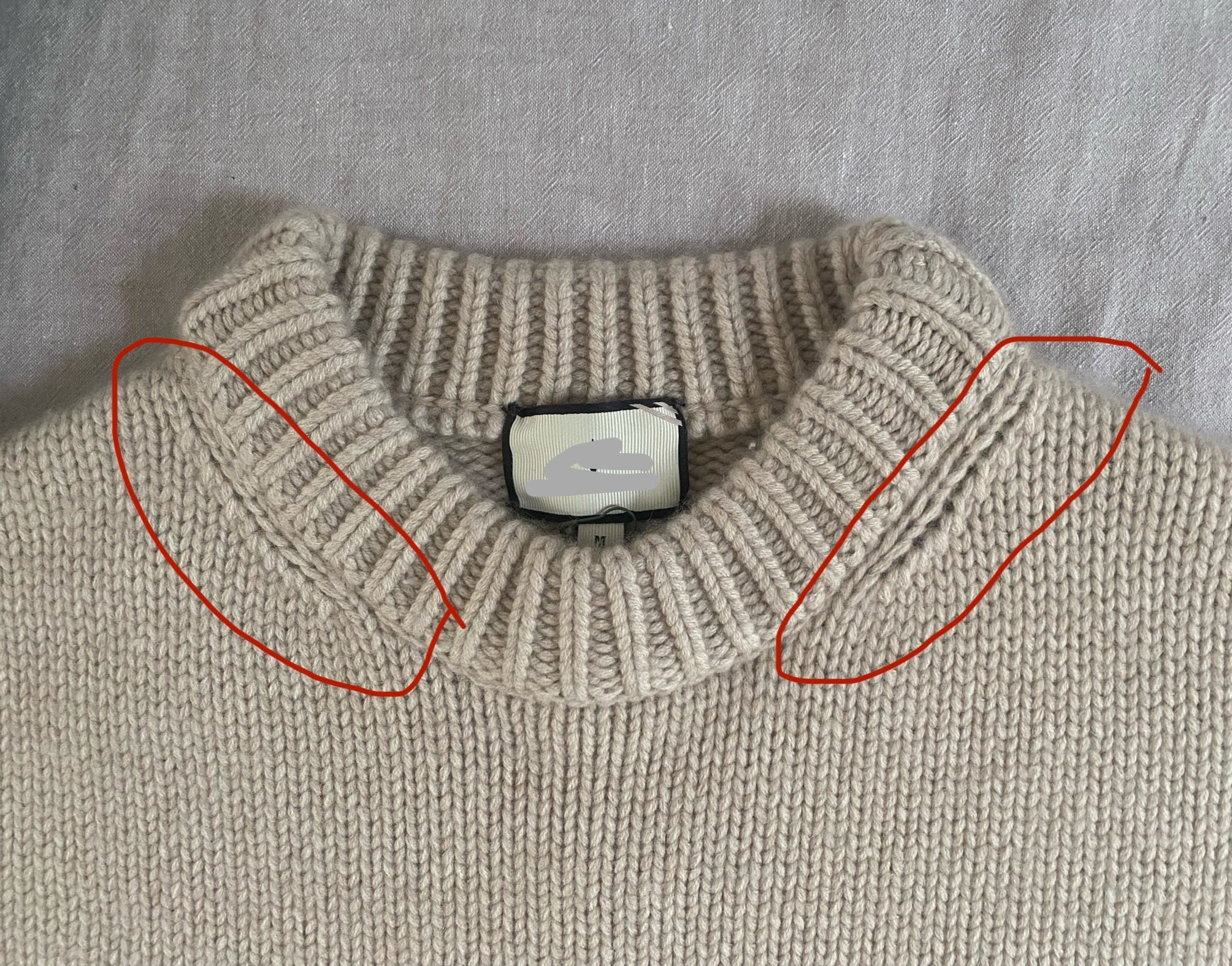


I partly put all this down to the fact that I’ve been knitting recently. Not especially well, and not long enough to claim any authority, but long enough to start seeing knitwear differently.* I’m noticing construction. I’m noticing stitch details. Arm decreases. Uneven tension. I’m looking at my knitwear’s ‘insides’. It’s not that I paid no attention previously, but I’m no longer just noticing. I’m curious. And moreover, I’m assessing or at least, attempting to.
So I emailed the (sweater) store. The first response was straightforward: a warm apology, and the offer of a discount or free return. Their email strongly implied that I’d received a faulty piece, so I returned it and reordered. When the second sweater arrived with exactly the same issue, I emailed their customer service again. This time, their explanation shifted. They’d now consulted with their ‘design team’, and the (uneven) stitching, I was told, was part of the design.
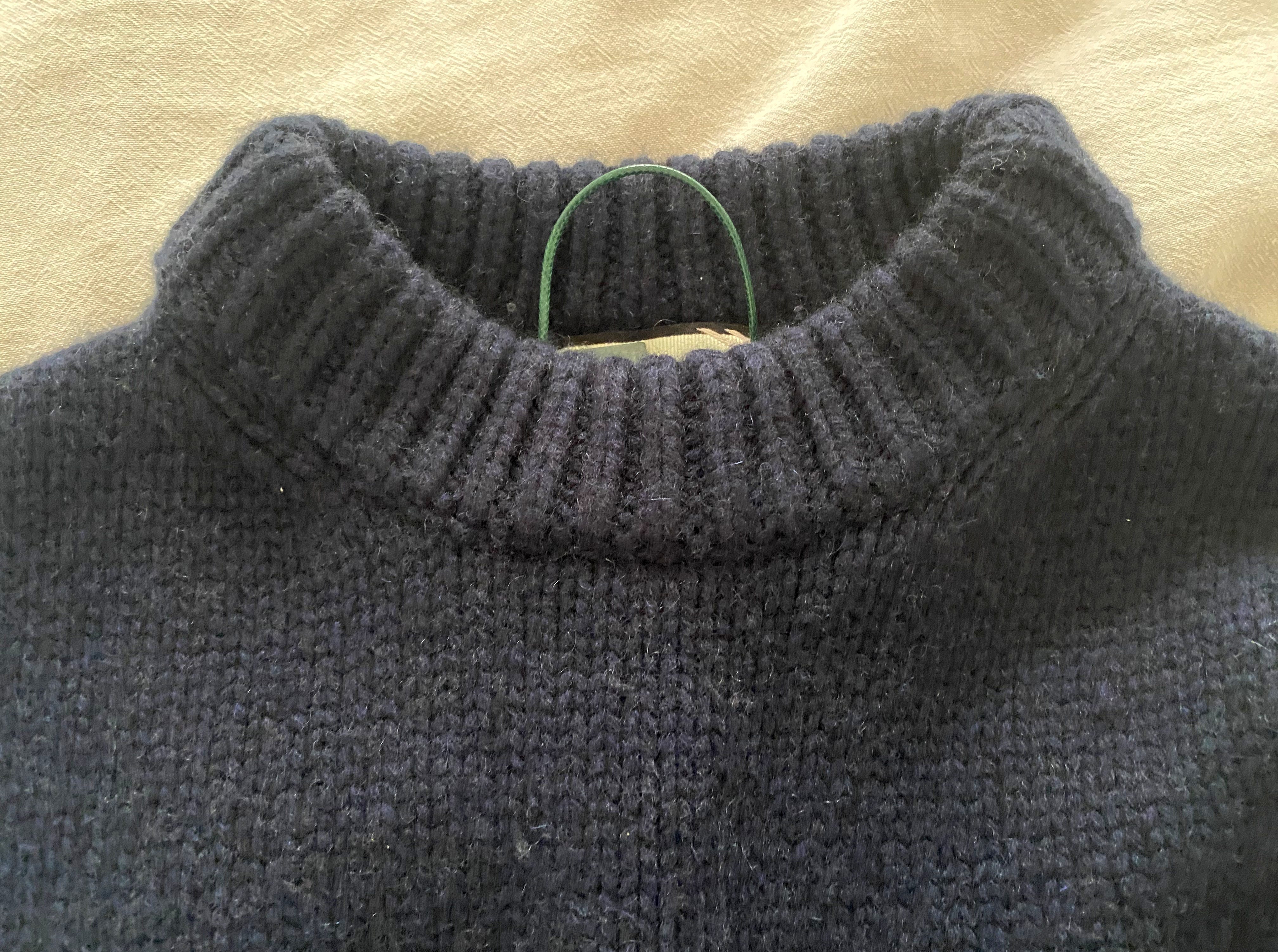
For multiple reasons, this got to me. I went back to my navy sweater. The neckline stitching was much less visible in the darker yarn. Still, the stitching around the neckline was symmetrical. The notion the asymmetrical stitching was “intentional” was kinda wild.
At the same time, this wasn’t the first interaction in this vein I’ve had regarding online purchases that haven’t met the mark. We don’t hear that much chatter about this stuff, but maybe you’ve been there too?
Since this exchange, I’ve been thinking a lot about quality — what it is, how we recognise it, and who actually decides when something meets ‘the mark’.
Quality standards
At what point did this become my call?
Because in many cases, I’m not sure I could clearly articulate the benchmarks I’m working with. I’ve certainly found myself holding a garment, turning it over, trying to work out whether what I’m seeing is a defect, the quirks of an unfamiliar material, a cost-cutting decision, or genuinely a design choice. If we dare to ask, brands might clarify — sometimes helpfully, sometimes with telling defensiveness — or they might not. And even when they do, it doesn’t necessarily resolve the question. We’re ultimately left deciding whether that (un)intentional feature/defect is acceptable to us.
At a certain point, that quality control job becomes ours.
In architecture, there’s always a gap between what’s designed and what actually gets built. Details are carefully resolved in the studio, but once construction begins, tolerances open up. Specific materials can’t be sourced, or they perform unpredictably. Unfamiliar materials or details are subbed in. Workmanship varies. Costs get managed down. Someone still has to decide whether what they’re looking at sits within acceptable range or whether it crosses the line, whether it’s sub-standard. That judgement happens repeatedly, at multiple points across a project, often with different professionals involved. It’s not perfect — far from it — but there are standards, guidelines, and layers of third-party oversight. There is, at least, an infrastructure of quality control. The burden doesn’t sit entirely with the end user.
In fashion, we’re at arm’s length from any such infrastructure.*
We’re not getting progress updates. We’re not hearing about that one factory that’s had ongoing issues with defects, or the batch that didn’t quite meet spec. There’s no equivalent of the architect quietly flagging that the tiles delivered this morning aren’t quite right.
What we do get in abundance is marketing, and the message is that everything is more than a-okay. Even in the face of widely discussed declines in quality. And this isn’t just bottom of the barrel fast fashion; there’s plenty of high-price, high-end clothing that performs no better in wear, and ‘sustainable’ brands aren’t inherently immune to quality issues either, which all drives the rise of vintage and second-hand. Not a bad thing.
But when the parcel arrives, and we’re standing there with the garment in hand, hesitating, humming and hawing — aren’t we doing something similar anyway? Just in a more improvised way. We inspect, compare, second-guess. We try to locate the line, without being entirely sure who set it. It’s giving caveat emptor — let the buyer beware.
Most of us have developed our own working set of standards, I believe. Though we perhaps don’t talk that much about them.
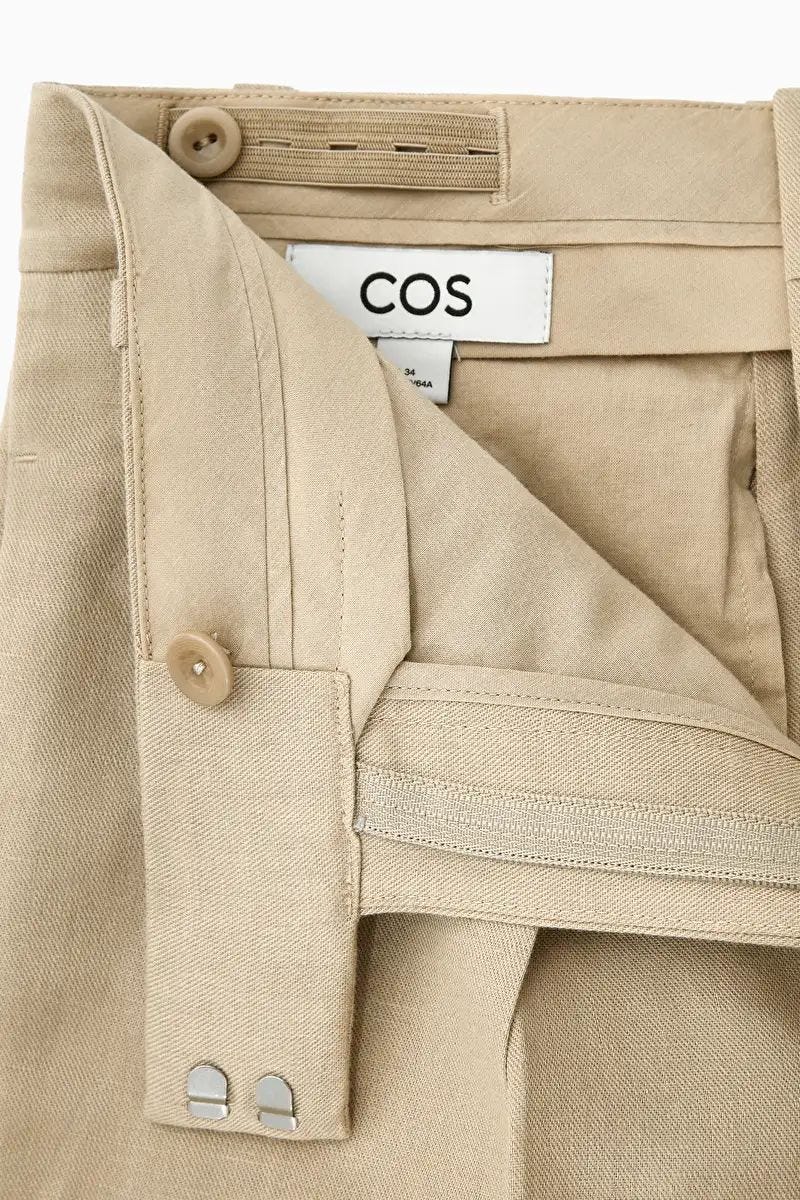
We have thoughts about fibres: a preference for natural materials, with allowances for synthetics when they feel justified by the design. Maybe it’s craftsmanship — neat stitching, secure hems, things that feel like they’ll hold up. Maybe it’s signals of durability, or the absence of them (sensible care instructions: hello ‘do not wash!’). And then there are all the smaller cues we accumulate over time, some grounded in experience, some more assumed: certain brands, certain details. Beautiful ‘insides’: shorter stitch lengths, flat seams, appropriate interfacings. Pattern matched seams. Bias binding. Decent linings. Robust button attachments. YKK zips. Functional pockets. All of these become, in different ways, shorthand for “this is well made,” whether or not that shorthand always holds.
There’s no shortage of guidance, either — entire corners of the internet devoted to decoding quality, from fibre content to construction techniques (this vid from fashion historian Bernadette Banner is a good basic primer; it goes without saying that the more one knows about the dying craft of clothesmaking, the better equipped one is to assess many aspects of quality). And alongside that, a steady stream of worthy reminders about what sits behind the fashion industry more broadly: labour conditions, dupe culture and intellectual property issues, product health and safety concerns. The stakes of “quality” aren’t just aesthetic or personal, even if that’s where we most often encounter them.
*To be sure, I’m not denying that all forms of design aren’t fraught with quality issues. It made me think of this interview with the inimitable Jonathan Anderson, where he described couture as the “purest form” of fashion — “it’s done by people, it’s about craft… it’s all by hand.” In that sense, good architecture (as distinct from the built environment, writ large) is probably closer to couture. Both are, in different ways, crafted one-offs. The high street, and I think even much of the high end, sits quite far from that ethos.
When we can’t quite tell
But the line’s a blurry one, for me at least sometimes. There’s no rigid standards for garment quality, after all.
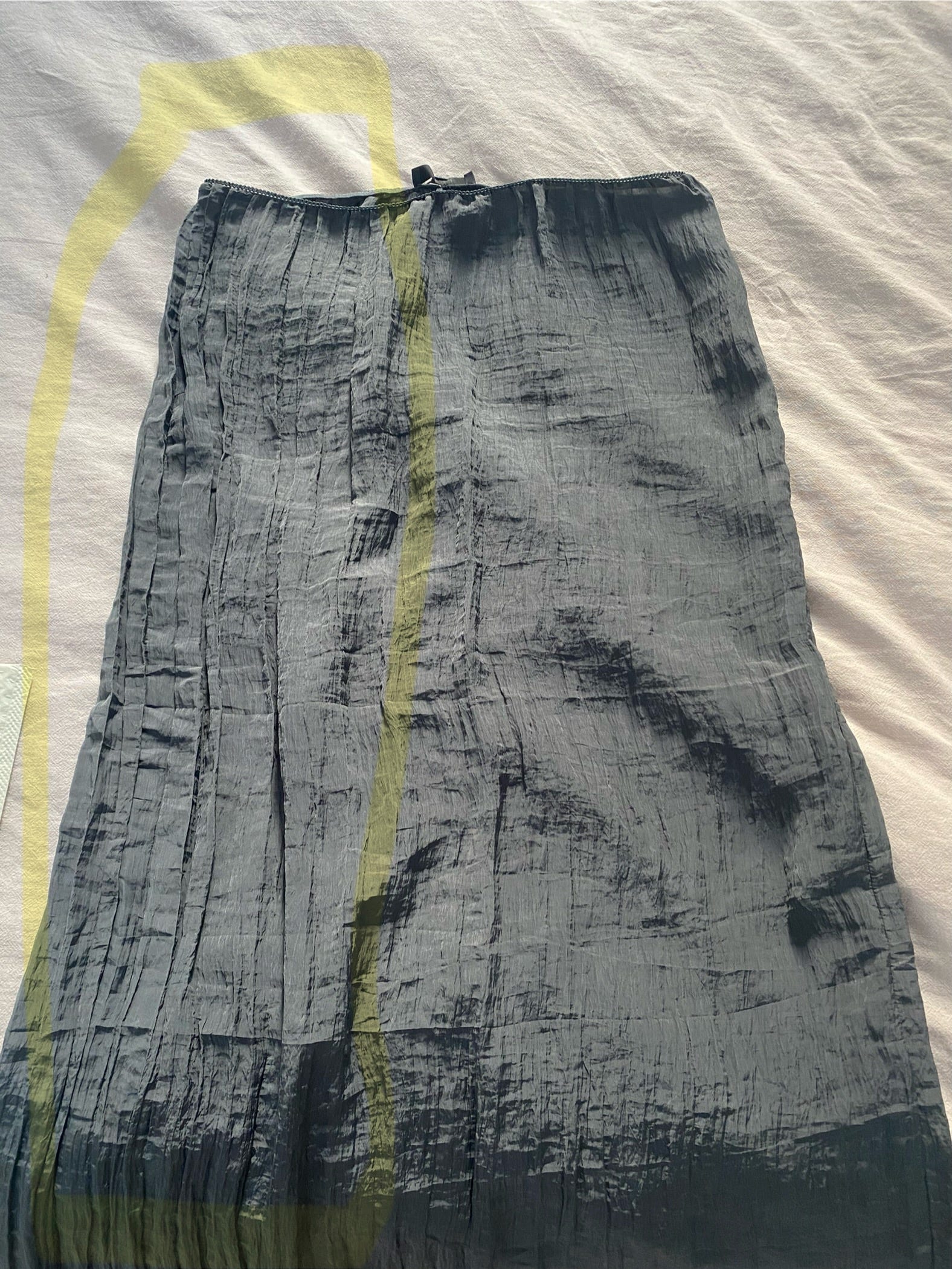
Case in point. I purchased the Tibi crinkle slip skirt — super basic design, high price, nice Ring-3 colour, very particular texture. When it arrived, the crinkling was uneven. One section of crinkling was very much more pronounced than the rest, which in turn changed how it hung down one side of my legs. I emailed the small retailer where I bought it. They were very understanding of my disappointment, while also explaining that this was characteristic of the fabric, that it could be worked by hand, that it might soften with wear. It all sounded reasonable.
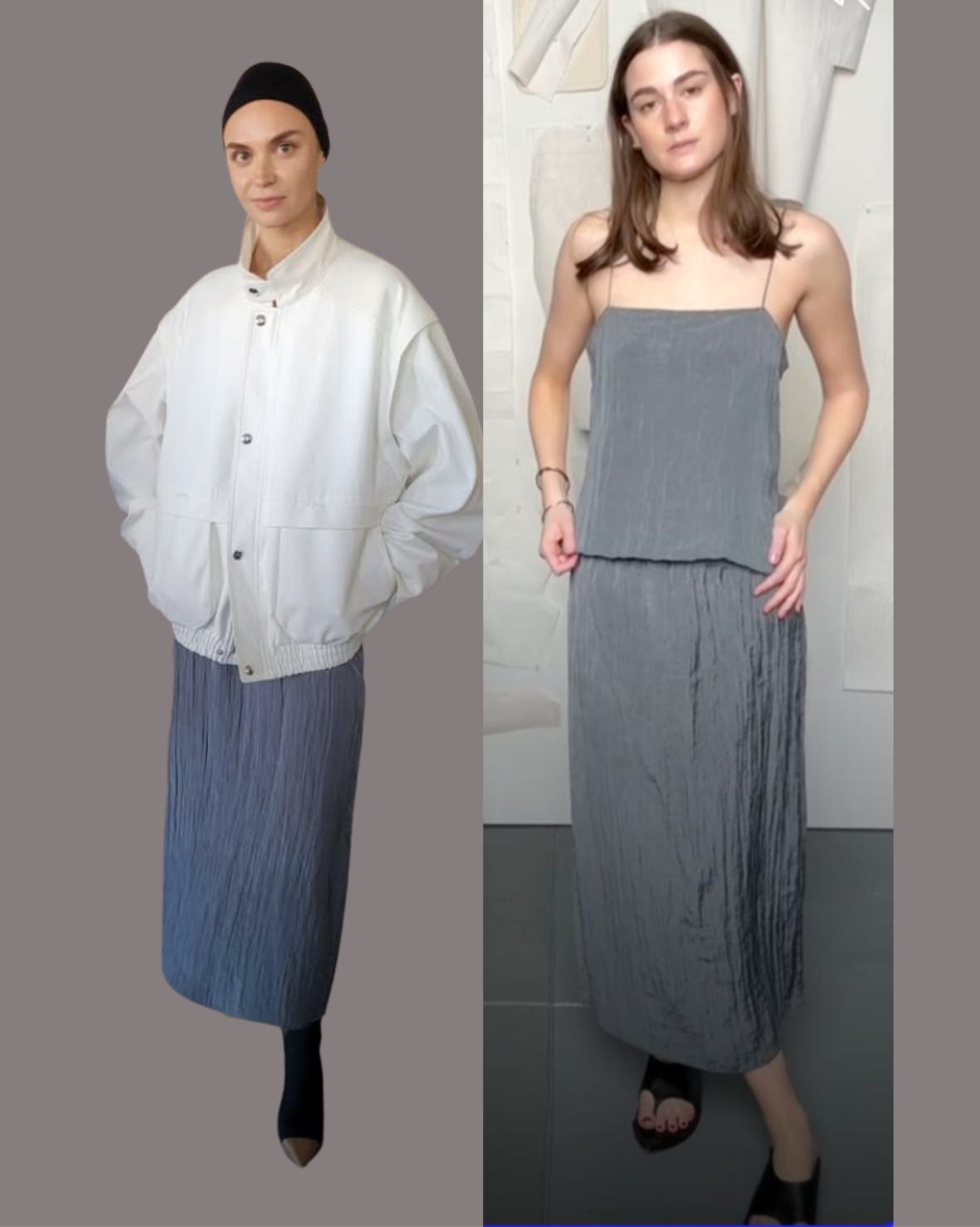
But I still returned it. Not because I was certain their account was wrong, far from it. But because I couldn’t tell. And I had no real way of knowing whether another one would be the same; in any case, that retailer didn’t have another piece in my size. I concede I had reservations going in (more a sense that it wasn’t quite worth the price to me) and this unexpected variation only compounded that.
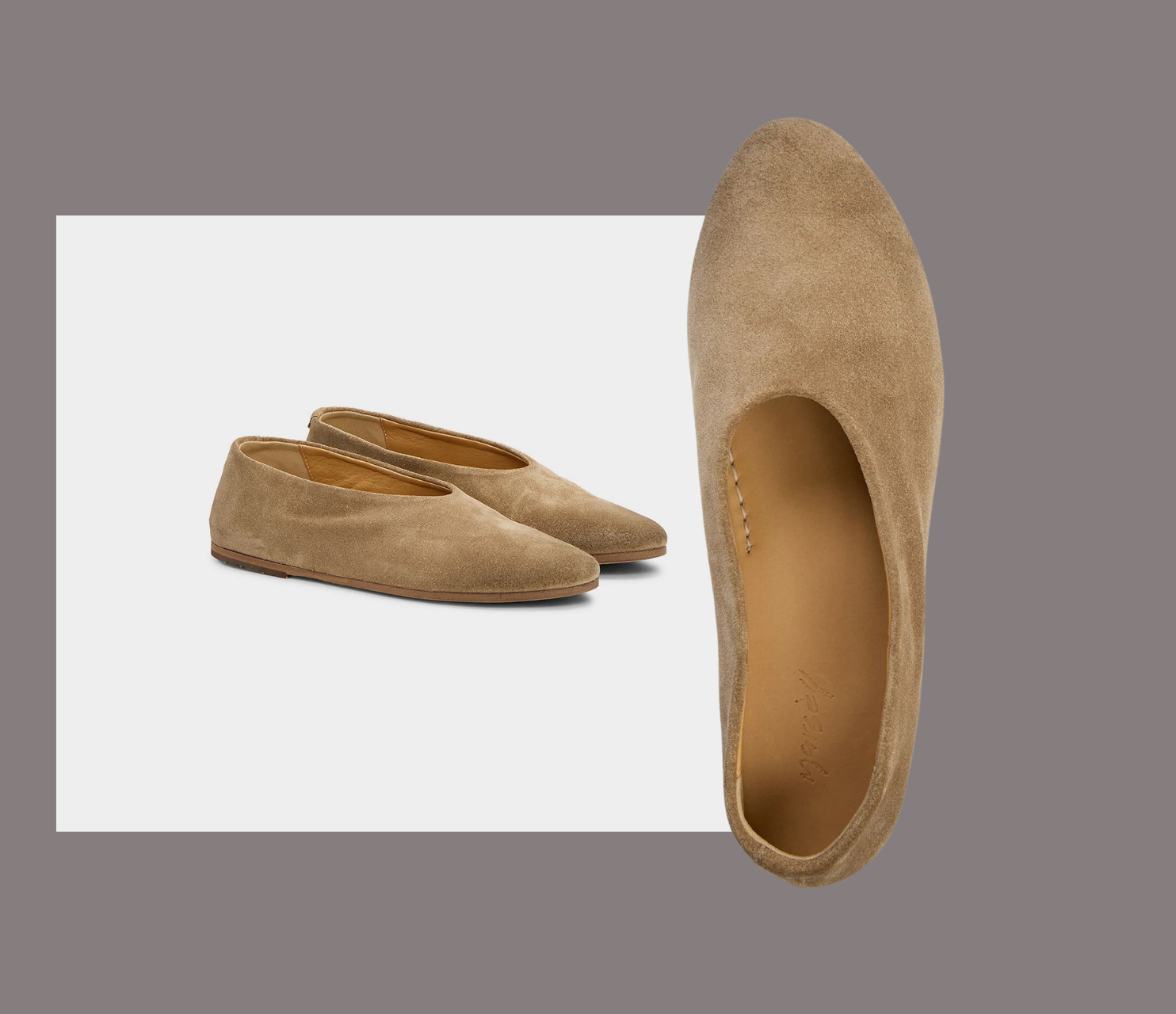
I’d had quite the opposite experience not long before, with a pair of Marsèll ballet flats. The quality was immediately apparent: the leather was actually buttery-soft, the stitching and glue neat as a pin, and on and on. It was just obvious, for me anyway, as soon as I had them in my hand. And yet they weren’t quite right. Slightly too roomy, and some hesitation about the colour, the suede. Normally that would be enough to return.
Instead, I hesitated.
For days. Call me insane, but the quality made them hard to let them go. It created a kind of pull that perhaps speaks to the relative rarity of fashion really wowing us with craftsmanship. Quality, for me at least, seems to really influence how much compromise I’m willing to entertain, even if just fleetingly.
I don’t think my shopping misadventures are strictly about quality decline.
I think, they’re equally about quality variability. Even within the same brand, pieces are made in different places, under different conditions, and, increasingly I think with different levels of quality, and/or quality control. Retailers might have (quasi or actual) loss leaders — priced to draw us in — and then the pieces where they really make their money. That crinkle skirt, alongside all the other Tibi acetate slips and skirts, feel very much like the latter. So, caveat emptor… for me, regardless of unexpected fabric variation.
And moreover, the same piece—well, you can get a dud; or the ‘dud’ aspect of it is especially visible in this colour but not that one.
This leaves us with some pieces that appear to be excellently well made. Other pieces that are clearly far less so. And perhaps many pieces that occupy that murky middle ground in between.
And that’s where we come in. We ultimately decide what’s acceptable. We decide what we’ll overlook. We are quality control for our wardrobes. We decide what crosses the line — not with perfect knowledge, but with a mix of experience, instinct, and whatever reference points and expertise and insight we’ve accumulated along the way. For me, that now includes knitting, which has made me more attentive to how knitted pieces are made, albeit not necessarily more certain about how they should be judged (but one day, fingers-crossed!).
So the question isn’t just whether something is well made.
It’s how you decide when it isn’t. And I’ve gotta say, this all requires energy that we may have nor want to expend in this way. For there’s mental load in following up with the brand, and quarrelling over this neckline or this variation…
PS. Two final things: (1) I’d still highly recommend the sweater, but caveat emptor ;) and (2) for anyone wondering, I have zero intention of rebuying the sandstone sweater. If there’s a silver lining to the neckline issues, it’s that they’ve stopped me in my tracks of the dreaded multiple buying curse/urge! More on my/that affliction here:

Welcome—I’m pretty new around here. If you like what you read, please subscribe, like or and share to support my work. It really helps. And please, leave a comment, I’m always keen to hear your thoughts! Thank you :) — Meg.
A little more reading:
The phantom wardrobe gap

The road to building a wardrobe that works is stricken with potholes, diversions, and about-turns. This week I found myself veering off course.
Is this piece too bossy?

I saw a great post from Rose @Creative Classicist (from the other app) yesterday that got me thinking.
The Shape of Us

Wardrobe confessional: I play favourites.
Some proportions reliably deliver that full-body-YES. We’re talking volume on the body that just hits right. Volume that I can count on to feel oh-so me.
And the architect in me wonders, do we dress like an architect designs?
Modern, minimal, Australian: Three recent picks

Australian designers are spoiling us with modern, effortless clothes that hit the sweet spot between ease and polish. As an Aussie, I love backing local—but honestly, their fabrics, designs, and quality speak for themselves (no #spon here).
Learning to sew and knit has made me the worst customer (well, in the best possible way for me). I’ve become so picky about tiny details and won’t tolerate anything that looks wrong to me, no matter the fabric or price point (but especially not at Tibi’s price point)! That sweater and skirt would have driven me crazy too...
I can't seem to find any online sources describing it, so the following analysis is solely based on 40 years of experience as a handknitter and a casual observer of machine knit garments. The upper part of the neckline looks like it is shaped by decreasing a stitch on every row (it is what forms the line leaning outwards). Decreasing on every row always (in my experience – and I did it for two decades on all my socks) ALWAYS ends up asymmetrical because one of the decrease lines pulls open, as it has very visibly done on the light sweater. Without knowing the exact technical terms it has to do with the fact, that by "bunching up" yarn (the decrease is made by knitting two stitches together) you create af point of extra tension that pulls at the weaker stitch right next to it. Why it is asymmetrical probably has something to do with twisted tension nature of yarn (fibers spun in one direction) and thus being better at holding together a left leaning decrease than a right leaning. That is why normally you only se decreases on every other row in both handknitting and commercial knitwear because the row with no tension drama helps to pull everything nice and smooth. The interesting thing is, that the dark sweater seems to have a little bit of the same issue but on the other side(!) of the neckline. My theory is, that the designer had very little experience with knitwear and made poor construction decisions. In case of the dark sweater the manufacturer saved the day through some kind of experienced craftsman trick (possibly knitting from the wrong side since the issue is on the other side). Somehow the brief got lost or they changed manufacturer for the light sweater and no one at the brand knew to check for it.