

Don’t stop at the scroll.
The scroll gives us inputs. But our wardrobe is where the work begins.

We scroll. Save. Screenshot. Research. Watch styling videos, reviews, hauls. Hunt down the perfect version of the thing. Spend hours looking and looking, absorbing content, getting inspiration. Perhaps we buy stuff too. Maybe a lot of stuff.
I know I’ve become very good at consuming style. I’m less sure I’ve been as good at practising it.
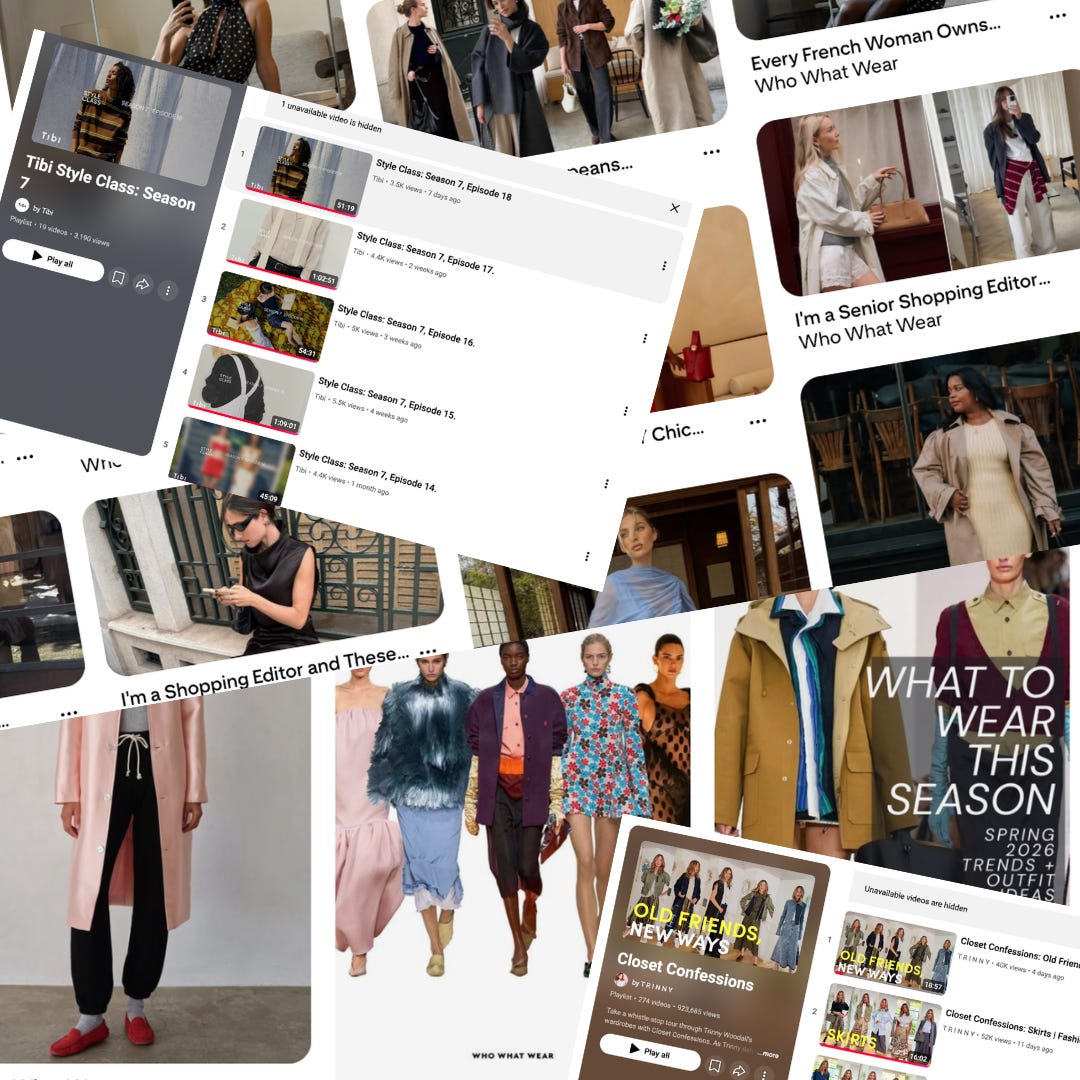
The actual practice is less glamorous: the rounds of trying on. Pairing this thing with that. Swapping out various accessories. Going for the narrower jean, the larger tote, finding a more neutral-leaning tone. Reworking the planned outfit that didn’t come together in practice. Making slight adjustments to fix the awkward proportions. Discovering how this shoe changes the whole feel of this outfit, but barely registers in this other one. Returning to an old piece and suddenly seeing it with new eyes when paired with something newer. Following all these iterations, maybe even with a single item (like the skirt below) as they lead us to new and unexpected combos.
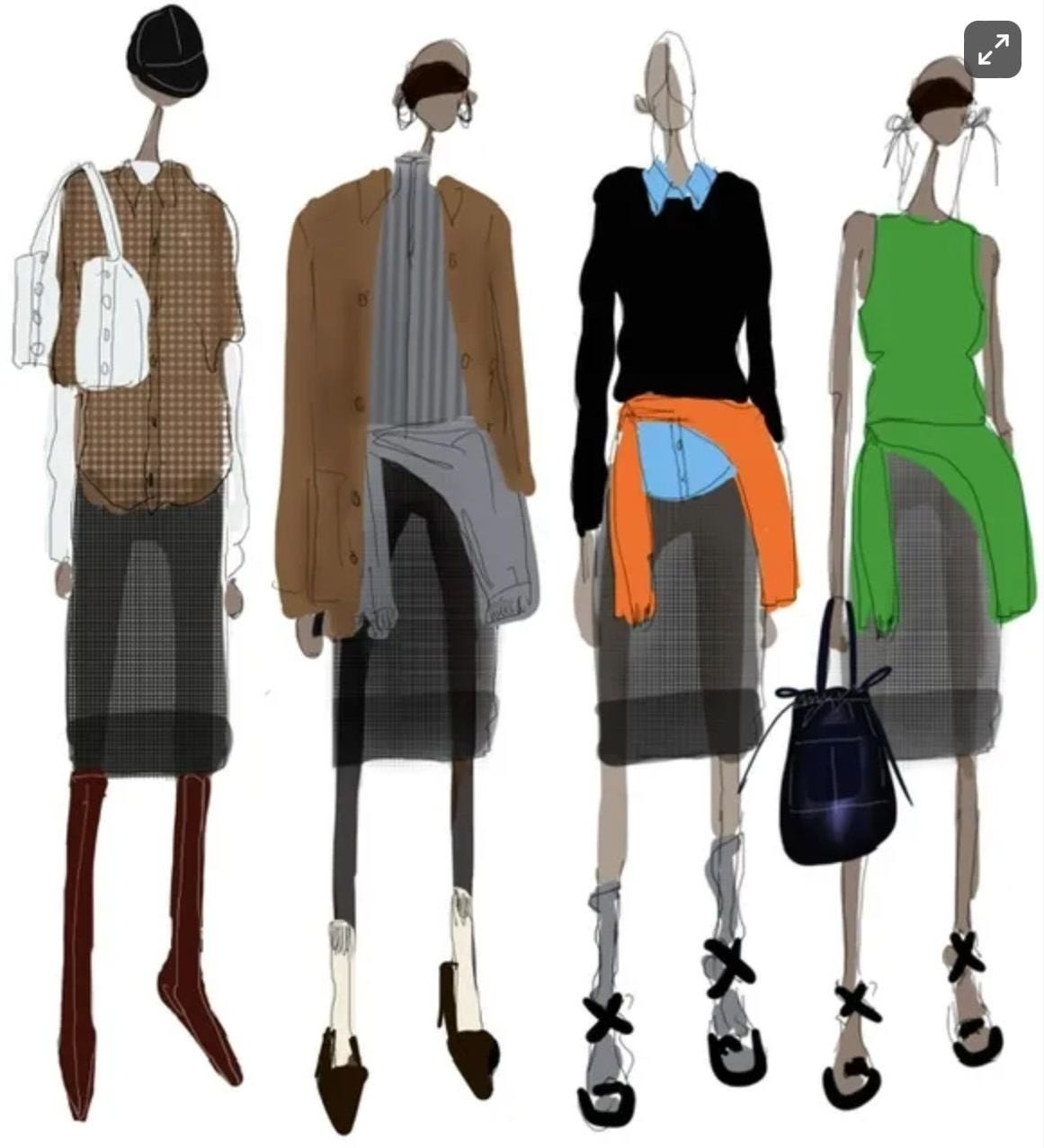
More often, I suspect, many of us stop before the wardrobe play really begins.
I know I’m guilty of this. And to be honest, the scroll is often more practical. We can lap up all the style inspo while commuting, waiting for school pick-up, or sprawled on the couch at the end of another full-on day. Maybe we do think about actual outfits. Maybe we meticulously plan our outfits (and maybe not!). Maybe we’ve dabbled with wardrobe apps, even created flatlays.
But then when we go to wear that outfit, actually put it on, we immediately sense something is off. So we abandon the whole thing entirely. Cut our losses, chalk it up as a dud, and start afresh. Perhaps we’re now running late, and before we know it, we’re reverting to our tried-and-tested default style uniform.
Wardrobe experimentation asks for something different: time, yes, but also the headspace to play, and a tolerance for the uncertainty of not necessarily producing something good straight away.
Design disciplines expect iteration


Renowned designer Charles Eames once described furniture design as ‘a kind of unfinished business’.
His famous Eames shell chairs weren’t designed in a single stroke of brilliance. They came about through countless years of prototyping and refinement; testing materials, structures, proportions and manufacturing techniques. Good design was understood as iterative; it was shaped through repeated, incremental changes and refinements.
Architecture schools similarly put huge emphasis on reworking ideas. Design studios are built around iteration, and also embracing the messy uncertainties of design practice.
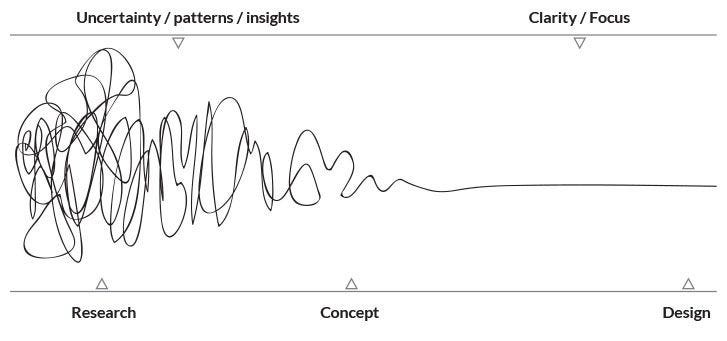
There’s a well-known design diagram that captures this iterative process: the process often begins in ambiguity. Research, testing, false starts, contradictory ideas, seemingly endless possibilities (or constraints!). The early stage often feel very messy, even chaotic. Then, gradually, through reworking, critique and refinement, something more akin to clarity begins to emerge. See how the line eventually straightens. That’s when designers actually stop feeling entirely lost in the chaos; it’s when they sense a decent concept finally taking shape.
Architectural school teaches this design process by making you practise it, repeatedly. You design. You show your work to teachers and peers. Get heavily crit-icised (iykyk). Go back to the drawing board. Move things around. Cut things. Add things. Rework. Rework. Rework. And then your present your work again…


In doing so, you learn that the first version that had you somewhat convinced at the outset, is so rarely ‘the one’ and that neither numerous false starts nor the messy uncertainty that overshadows most of this process, represent failure. Indeed they become so familiar that you become quite convinced these things and these feelings are intrinsic to ideation. Likewise, you learn that a design that’s ‘almost there’ is not complete.
Learning to design is, in large part, building your stick-to-ed-ness muscle. It’s learning how to tolerate the unresolved long enough to both develop and refine a single good idea.
Many probably rarely fully embrace this iterative practice to creativity in our wardrobes, myself included.
In design, unresolvedness is often understood as part of the process. In the wardrobe, I know I can be far less patient. A first attempt that doesn’t pan out as planned is quickly assumed a failure and we often expect a purchase or last minute outfit idea, to just work. When it doesn’t, it’s often a blame game: wrong piece, wrong body, crappy purchase…, or worse, no instinct for style.
In short, we pull the plug before really engaging in the wardrobe work.
Watching other people do the work
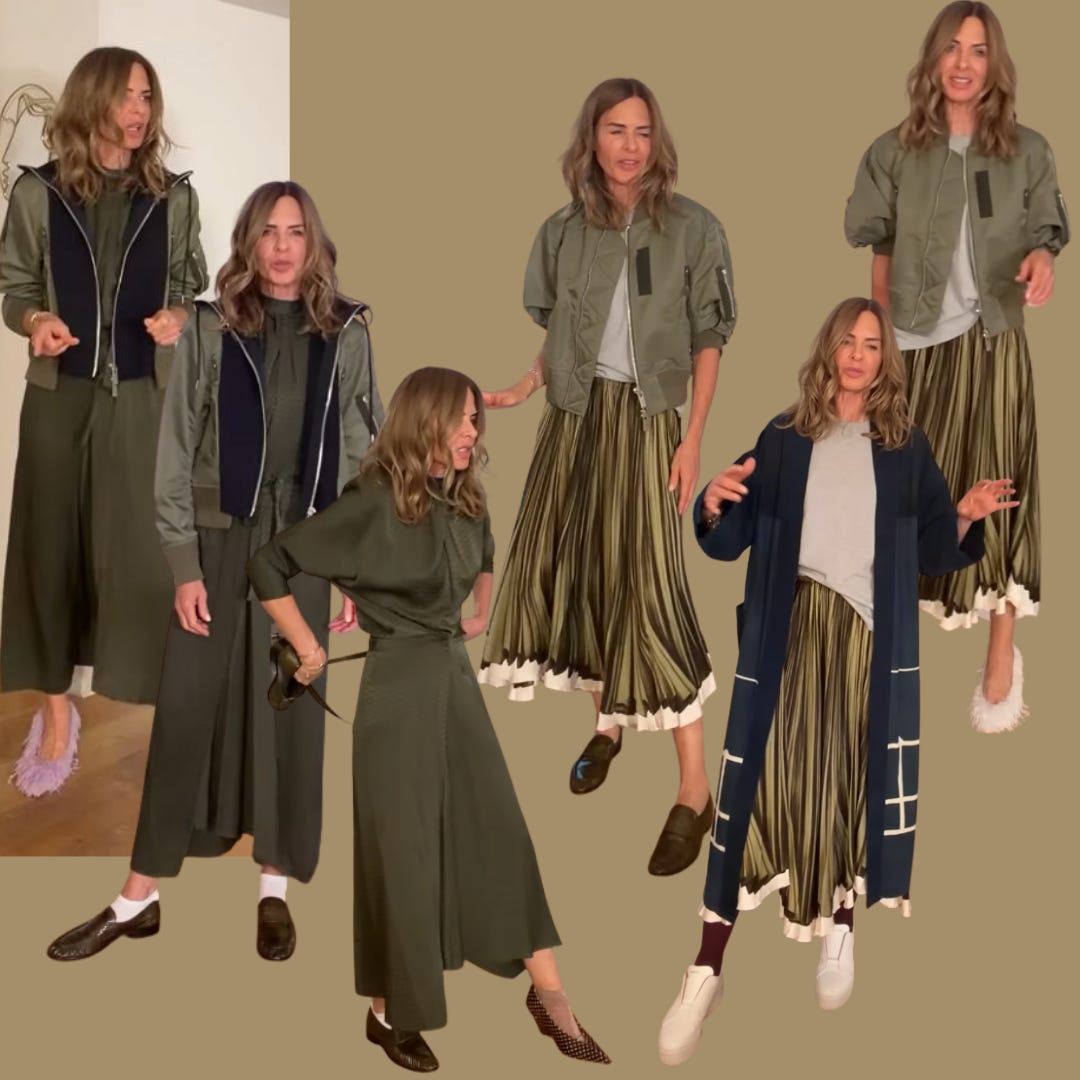
For me, some of the most compelling style content online makes this iterative process visible. Trinny’s recent ‘Old Friends, New Ways’ video is a good example among many, as are the repeated wardrobe test-runs and try-ons and play-times of substackers like Hey Mrs. Solomon on Style, like Anna Newton’s spring wardrobe play (watch or read) or Reva Luft’s continual re-wearing and re-imagining, and her play in Anna’s wardrobe.
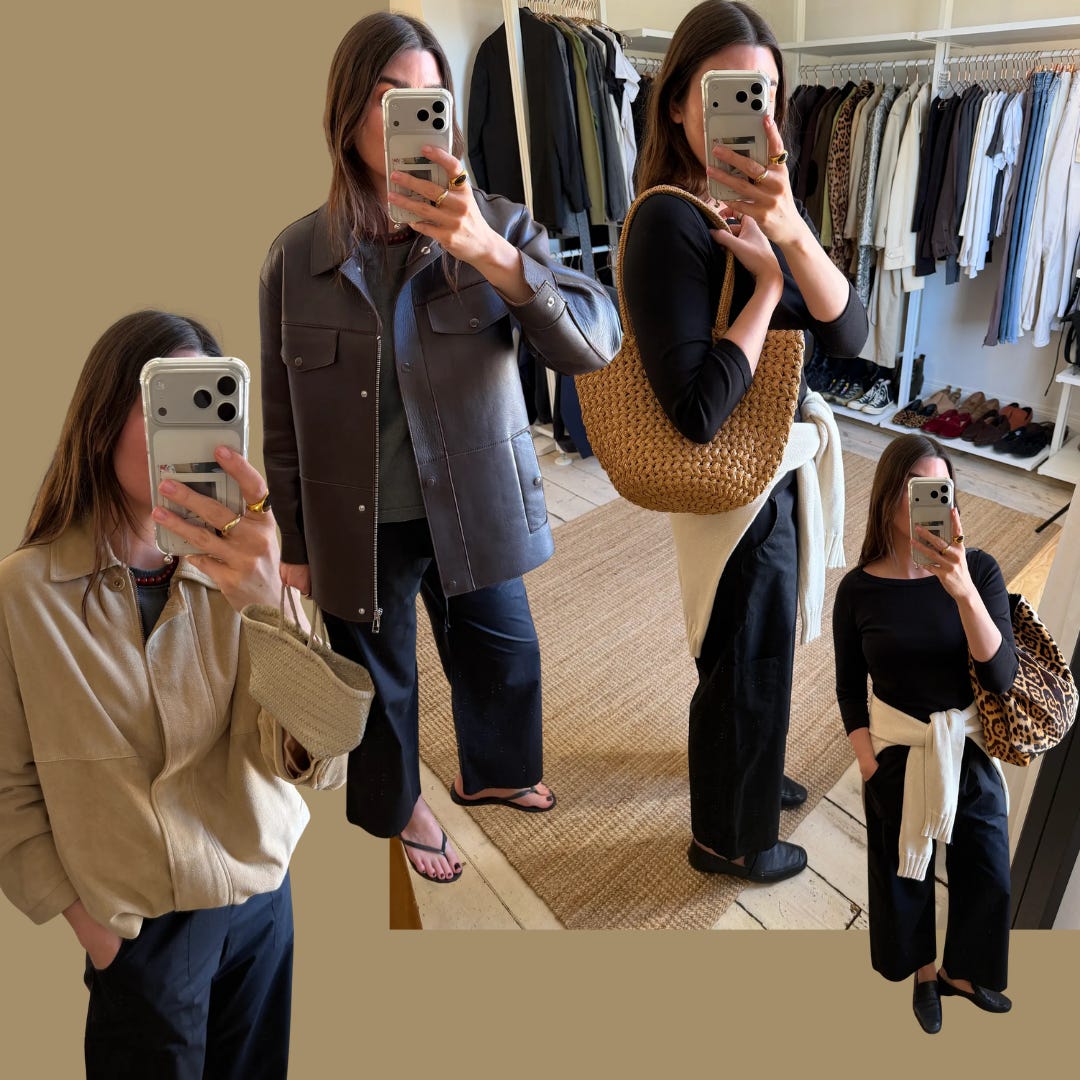
What I find most interesting isn’t simply the conclusions they arrive at, though I’m all ears for those too. What really fascinates me is getting that bird’s-eye view of their personal experimentation process: all the trying, the critical eye, the rejecting, the reworking, the testing of different proportions, footwear, silhouettes and colour combinations. All the play.
It’s easy to watch this kind of content and assume the real gold lies in the styling advice being delivered. I know the pieces themselves and the final outcomes (this outfit over this one) get my attention. But I do think the more important lesson may be what’s hiding in plain sight: creative people doing creative work.
Sure, they’re producing content. But remove the camera and I’d expect much of this experimentation would still exist, and likely in far greater volume than we’re ever privy to. The wardrobe play isn’t incidental to their style, or simply a means of explaining it to us. It’s likely instrumental in producing and continually refining it.
I’m certainly guilty of consuming other people’s wardrobe experimentation as inspiration, while overlooking the fact that the experimentation itself may sometimes be the missing piece of the puzzle for me.
Like design, we probably know intuitively that personal style rarely arrives fully formed. It develops through iteration, failures, second attempts, third attempts, and more adjustment. And as with design, this messy stage (all the squiggles, as above!) requires time and space. It can’t be skipped without impinging on the final result, and it can rarely be fast-tracked either.
Only by messing around with what we’ve got do we discover that the supposedly impossible trousers weren’t inherently bad, but our gut-impulse shoe pairings were. That the silhouette wasn’t off, but the bag, scarf or belt was quietly throwing the balance. That the jacket mentally dismissed six months ago just needed the sleeves rolled, shortened, or a slimmer silhouette beneath it.
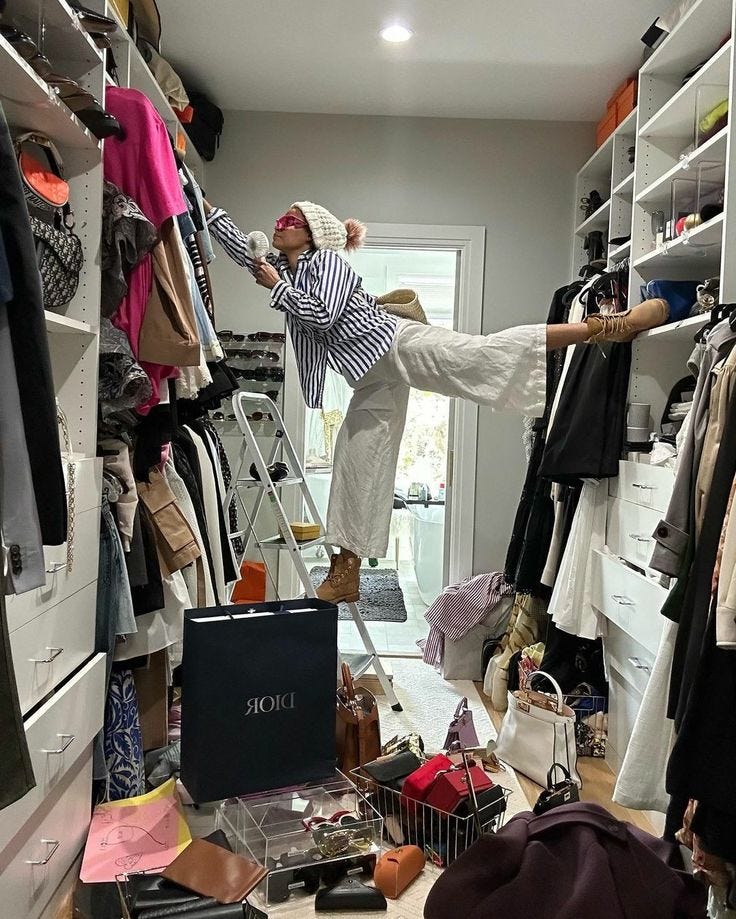
People with great personal style are not necessarily those with the best natural instincts in the wardrobe. Increasingly, I suspect what may differentiate them is how much they practise iteration.
They spend more time with their so-called problem children, working with them rather than banishing them to the back of the wardrobe. They test more combinations, rather than stopping at the first or second outfit that works. And throughout it all, they maintain a critical eye, continually taking in silhouettes, proportions, colour and balance, then responding to what they actually see and how they actually feel in the pieces.
Another thing I notice is that these creative types are rarely where we find all the endless dramatic wardrobe overhauls; these aren’t people who are forever starting afresh for the new season/year/job/life-stage. Sure, they take time to organise and they move pieces on. But they also stick with things, not just through a season, but often through years. And I don’t think that’s a coincidence, because wardrobe play doesn’t simply generate new ideas. It also deepens familiarity with one’s existing wardrobe tools, allowing creativity to build not only through novelty, but through sustained engagement.
Unfinished business: wardrobe play
Perhaps this is part of why our wardrobes can end up feeling kind of stagnant, why it can so easily feel as though the answer is just a few wardrobe-gap-filling purchases away.
For many of us, myself absolutely included, perhaps we spend far more time gathering creative inspo than we do engaging in creative practice. Not necessarily because we value consumption more than creativity, but because gathering inspo is the practical, easier activity. We can scroll while commuting, save ideas while waiting for school pick-up, research purchases from the couch at the end of a full-on day. Wardrobe play asks for something else: protected alone time, the right headspace, and a willingness to engage with uncertainty.
So the balance can become skewed. More scrolling, pinning, researching and shopping. Less trying on, experimenting, reworking and refining. Inspiration matters, of course. But inspiration is fodder for creativity, not creativity itself.
Personally, I think shifting that balance, even slightly, may be one of my key wardrobe goals for the rest of this year. Less assuming the next style inspo or purchase will do the heavy lifting and more making space for my own creative practice.
A little more reading:
The real enemy isn’t practicality — it’s “creative" as an excuse for the impractical

There’s a style idea that keeps popping up lately — and it’s been useful for sharpening my own thinking — the notion that creativity and practicality sit at opposite ends of a spectrum.
We’re not hard to dress. We’re just not the reference.

We can tell when a brand wasn’t designed for our body.
Colour doesn’t sit still.

Take a look at this image. The two inner violet colours are identical. They don’t look it. One appears darker, the other lighter. We can stare at it as long as we like—our eyes won’t let us see them as the same.
The phantom wardrobe gap

The language of wardrobe gaps needs to be handled with care. Because sometimes it’s the absence of a thing that helps give the whole its shape. Sometimes gaps are a feature to embrace, not a problem to fix.
I see playtime in my wardrobe as self care—when I take the time to try new things, put them on and experiment—I feel amazing and those outfits feel inspired. 💕🤘
Thanks for the reminder!
I think that it’s possible that sometimes we think of creative experiments as frivolous and unimportant.
If we reframe them as “training our brains to be more flexible and increase lateral thinking”, then it becomes more important.
That’s my logic anyway and I’m running with it!